If you are planning to build a SaaS product in 2026, the biggest mistake you can make is thinking that success depends only on writing code quickly.
A strong SaaS product comes from making the right decisions early. You need a clear product idea, a focused roadmap, intuitive UI/UX, scalable architecture, secure APIs, and a realistic plan for support after launch. When one of those pieces is missing, growth becomes harder, costs rise, and the product becomes more difficult to maintain.
That is why successful SaaS companies do not treat development as a one-time task. They treat it as a product journey.
Whether you are a startup founder validating a new idea, a business launching a new digital platform, or a company replacing outdated internal software, this guide will walk you through the practical steps involved in building a SaaS product that is ready for real users and long-term growth.
Start With the Problem, Not the Features
Every SaaS product begins with a problem worth solving. Before you think about dashboards, tech stacks, integrations, or pricing models, you need to understand what your users actually need.
A lot of founders start with a long list of features. That usually leads to a bloated first version and a slower launch. A better approach is to begin with one specific pain point and build a solution around it.
Ask yourself:
- Who is this product for?
- What problem are they facing today?
- How are they solving it now?
- Why is the current solution not good enough?
- What is the simplest version of the product that would still provide real value?
When those answers are clear, the rest of the process becomes much easier. Product decisions become more focused. Marketing becomes more relevant. Development becomes more efficient.
This stage is where product discovery matters most. A thoughtful discovery process helps you shape the product around actual business needs instead of assumptions. It also helps you decide whether you need a lightweight MVP, a more advanced first release, or a phased rollout.
Validate the Idea Before You Overbuild
In 2026, speed still matters, but smart validation matters more.
You do not need to build a fully mature platform before proving there is demand. In fact, doing too much too early is one of the most common reasons SaaS projects burn time and budget.
Validation can happen in several ways:
- Customer interviews
- Competitor research
- Simple landing pages
- Waitlists
- Clickable prototypes
- Early MVP releases
- Pilot programs with a few users or companies
The goal is not perfection. The goal is evidence.
If people are willing to join a waitlist, book a demo, test an early prototype, or pay for a lean version of the product, you are already getting the signals you need. That gives you confidence to invest in the right features instead of building based on guesswork.
Define the MVP Carefully
Your MVP is not the smallest version of your idea. It is the smallest version that delivers a meaningful outcome.
That difference matters.
A weak MVP feels incomplete and unhelpful. A strong MVP solves one core problem well enough that users can see the value immediately.
For example, if you are building a SaaS tool for service businesses, the MVP might include:
- User login and account management
- A clean dashboard
- One core workflow
- Essential reporting
- Payment or subscription setup
- Admin controls
It probably does not need advanced automation, multiple integrations, complex permissions, or a large analytics suite in version one.
The best SaaS MVPs are focused, usable, and built with room for improvement. They let you launch sooner, gather real feedback, and avoid overengineering too early.
Choose a Scalable Development Approach
Once your product direction is clear, the next step is building the right technical foundation.
A SaaS platform is not just a marketing website with a login page. It is a living product that needs to handle users, data, workflows, integrations, performance, and future updates. That is why the development approach matters from the start.
A modern SaaS product typically needs:
- A responsive frontend for a smooth user experience
- A reliable backend for business logic and processing
- Secure authentication and authorization
- A scalable database structure
- API support for external integrations
- Cloud-ready infrastructure
- Monitoring and maintenance planning
This is where many businesses benefit from working with a team that understands both custom web development services and SaaS product development. A SaaS product has to balance speed, flexibility, performance, and long-term maintainability. If the product is built on shaky foundations, scaling later becomes much more expensive.
UI/UX Can Make or Break Adoption
Even a technically strong SaaS product will struggle if it feels confusing or difficult to use.
People do not stay with software because it has the most features. They stay because it helps them get things done without friction.
That is why UI/UX design services are not just a visual upgrade. They directly affect user retention, activation, onboarding, and customer satisfaction.
Good SaaS UI/UX should help users:
- Understand the product quickly
- Complete key actions without confusion
- Navigate easily between workflows
- Feel confident using the platform
- Access information without overwhelm
This is especially important for dashboards, admin panels, CRMs, portals, and operational tools. These products often handle a lot of data and user actions, so clarity becomes a competitive advantage.
In practice, strong SaaS UI/UX often includes:
- Clear information architecture
- Thoughtful onboarding flows
- Consistent buttons, forms, and patterns
- Responsive design across devices
- Readable data displays
- Minimal friction in repeat tasks
A product that looks modern but feels hard to use will still lose users. A product with thoughtful UX tends to convert and retain better over time.
Build APIs and Integrations Into the Product Strategy
Very few SaaS products live in isolation anymore.
Businesses want software that connects with the tools they already use. That might include payment platforms, CRMs, accounting software, email systems, analytics tools, support tools, or internal systems.
That is why API development services are such an important part of SaaS planning.
If APIs and integrations are treated as an afterthought, teams usually end up patching them in later. That often creates complexity, delays, and technical debt. A better approach is to think about integrations early and design the product with flexibility in mind.
Common SaaS integration needs include:
- Payment and subscription billing
- User authentication
- Email and notification systems
- Reporting connections
- CRM sync
- Webhooks for automation
- Third-party services and partner tools
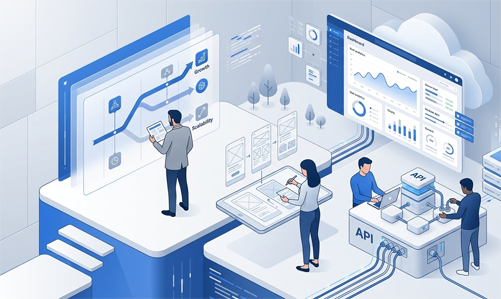
An API-first mindset can also open future opportunities. It makes it easier to build partner ecosystems, connect mobile apps, support external platforms, and expand the product without rebuilding the core architecture.
Think Beyond the App: CRM and ERP Connections Matter
As SaaS platforms grow, they often need to connect with broader business operations. That is where CRM and ERP solutions become important.
For many B2B products, users eventually expect the SaaS platform to work with their sales process, support systems, operations, inventory tools, or finance workflows. That means the product has to do more than function well on its own. It needs to fit into a larger business environment.
Examples include:
- Syncing leads and customer records to a CRM
- Connecting invoices or billing events to accounting tools
- Sharing operational data with ERP systems
- Sending support or activity data into internal workflows
- Automating actions across departments
These integrations improve efficiency and reduce repetitive manual work. They also make the product more valuable to companies that want one connected system instead of multiple disconnected tools.
For many businesses, this kind of integration is not just helpful. It becomes one of the reasons they choose one product over another.
Security, Reliability, and Performance Are Not Optional
In 2026, users expect speed, reliability, and security by default. If your SaaS product is slow, unstable, or hard to trust, users will notice quickly.
That means your product should be planned with performance and stability in mind from the beginning.
A healthy SaaS platform should include:
- Secure login and permission controls
- Reliable database handling
- Performance optimization
- Error logging and monitoring
- Backup and recovery planning
- Protection against common vulnerabilities
- Ongoing updates and patching
This is one reason post-launch planning matters so much. A SaaS product is never truly finished. Once users begin relying on it, uptime, response speed, and bug resolution become part of the customer experience.
Plan for Launch, Then Plan for What Happens After Launch
Launching the product is a milestone, but it is not the finish line.
After launch, real usage begins. Users behave differently than expected. New feature requests appear. Performance patterns change. Some workflows work well, while others need improvement. This is normal.
That is why website maintenance and support should already be part of the business plan before the product goes live.
Post-launch SaaS support may include:
- Bug fixes and issue resolution
- Performance monitoring
- Security updates
- Infrastructure improvements
- Browser and device compatibility updates
- Feature enhancements
- User feedback implementation
This ongoing maintenance is what helps a SaaS product stay relevant and competitive. It also protects the investment you made during development.
Products that are ignored after launch often become slower, riskier, and harder to improve. Products that receive regular support can evolve with customer needs and scale more smoothly.
Choose the Right Development Partner
A SaaS product involves more than coding screens and features. It requires strategy, planning, design, engineering, integration thinking, and long-term support.
That is why choosing the right partner matters.
A strong SaaS development team should understand:
- Product discovery and planning
- MVP strategy
- Scalable web architecture
- UI/UX for complex digital products
- API development and integration
- CRM and ERP connectivity
- Ongoing support and maintenance
The best partnerships are not just transactional. They are collaborative. You want a team that can help shape the product, identify risks early, recommend practical solutions, and support the platform as it grows.
Final Thoughts
If you want to build a SaaS product in 2026, start with clarity.
Be clear about the problem, the audience, the core value, and the smallest version of the product worth launching. Build on a solid technical foundation. Invest in UI/UX early. Treat APIs and integrations as part of the strategy, not an extra feature. Plan for maintenance from day one.
That is how strong SaaS products are built.
They are not rushed into existence. They are planned carefully, launched intentionally, and improved continuously.
If your business is exploring a new SaaS product, an MVP, or a scalable web platform, taking the right approach early can save time, reduce costs, and give your product a much better chance of long-term success.
Get a Free Quote
If you are planning to launch a SaaS product, Skybird Digital can help you move from idea to scalable platform with the right mix of product strategy, design, development, integrations, and long-term support.
FAQ Section
What is a SaaS product?
A SaaS product is software delivered through the cloud and accessed through a browser or app, usually with a subscription model. Users do not need to install it locally, and updates are managed centrally.
How long does it take to build a SaaS product?
It depends on the scope. A lean MVP may take a few months, while a more advanced product with dashboards, integrations, and custom workflows can take longer. The timeline depends on features, complexity, and development approach.
What should a SaaS MVP include?
A SaaS MVP should include the core feature set that solves the main user problem. It often includes login, user roles, one or two key workflows, billing if required, and a clean interface that users can understand easily.
Why are APIs important in SaaS development?
APIs allow your SaaS product to connect with third-party tools, mobile apps, payment gateways, CRMs, analytics platforms, and internal systems. They improve flexibility and make future scaling easier.
Why is maintenance important after launch?
Maintenance keeps your SaaS product secure, stable, and competitive. It includes updates, bug fixes, monitoring, performance improvements, and feature enhancements based on user needs.